
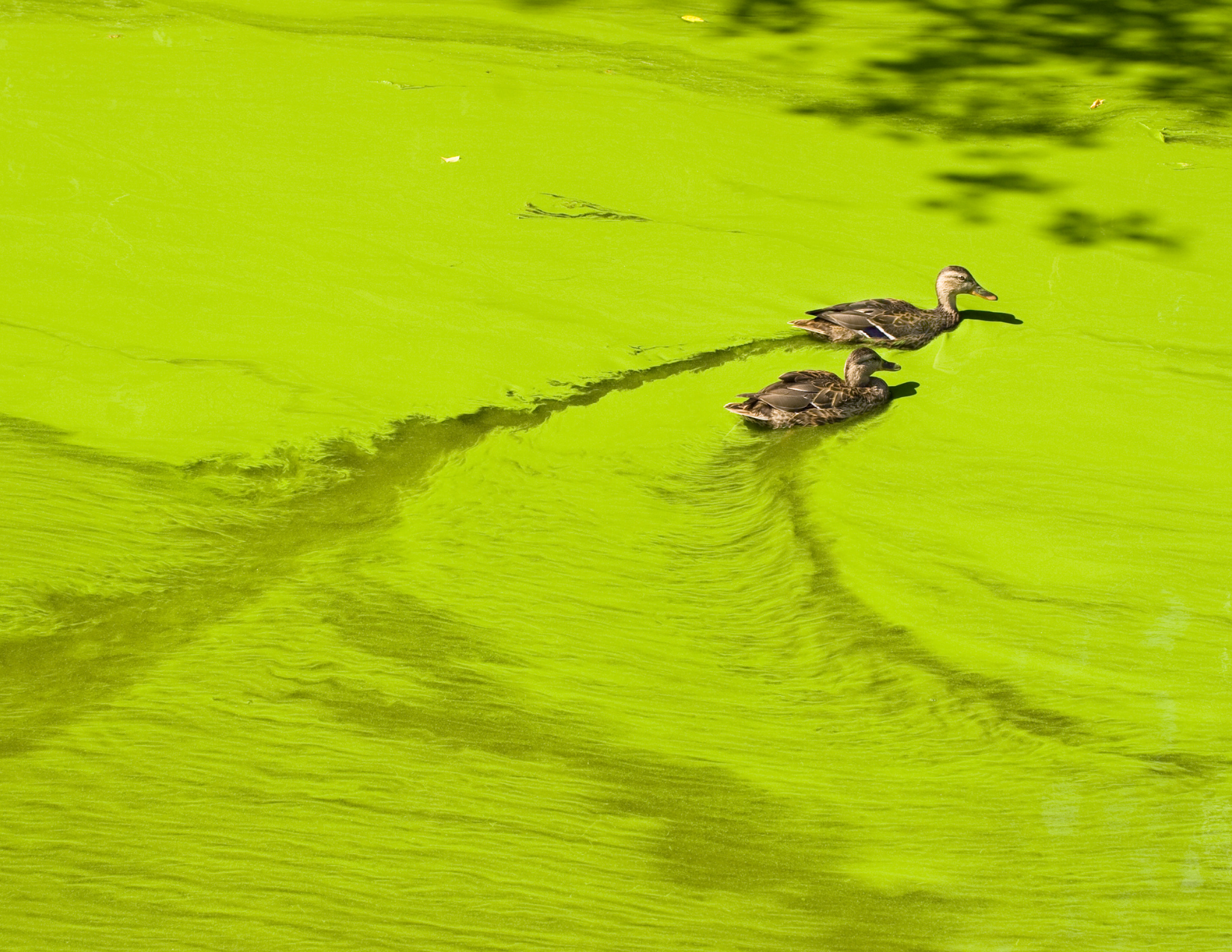
Ranging from microscopic, single-celled organisms to large seaweeds, algae are simple plants that form the base of food webs. Sometimes, however, their roles are more sinister. Under the right conditions, algae may grow out of control — and a few of these “blooms” produce toxins that can kill fish, mammals and birds, and may cause human illness or even death in extreme cases. Other algae are nontoxic, but eat up all of the oxygen in the water as they decay, clog the gills of fish and invertebrates, or smother corals and submerged aquatic vegetation. Still others discolor water, form huge, smelly piles on beaches or contaminate drinking water. Collectively, these events are called harmful algal blooms, or HABs.
Harmful Algal Blooms Impact Everyone
These blooms are a national concern because they affect not only the health of people and marine ecosystems, but also the “health” of our economy — especially coastal communities dependent on the income of jobs generated through fishing and tourism. These blooms occur in fresh and salt water alike, wreaking havoc on drinking water, fisheries, and outdoor recreation as the unsafe water poses a health risk to people and pets. With climate change and increasing nutrient pollution potentially causing HABs to occur more often and in locations not previously affected, it’s important for us to learn as much as we can about how and why they form and where they are, so that we can reduce their harmful effects.
What can be done?
On the federal level, management of harmful algal blooms requires close coordination between municipal, state, and federal bodies, including the National Oceanic and Atmospheric Administration (NOAA), the US Environmental Protection Agency, the Food and Drug Administration, the US Geological Survey, and the Centers for Disease Control to monitor and address health risks.
