
Project Kiana: A Hidden Gem for Mount Vernon Residents
The Long Island Sound Community Impact Fund’s 2024 grant recipient, Westchester Land Trust, received $99,273.00 to complete Phase 1 of Project Kiana, which included assessing the historical and environmental relevance of a natural space in New York.
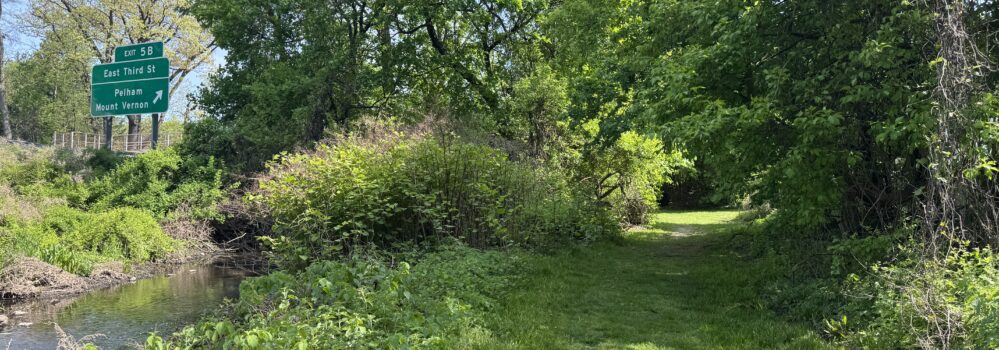
Tucked away in a quiet neighborhood, the Project Kiana site is a hidden gem for many Mount Vernon residents. The site is a green space nestled between the Hutchinson River Parkway, the Metro-North Railroad, and an urban neighborhood. It also contains the Hutchinson River, which is part of the Long Island Sound watershed. The site is owned by the New York State Department of Transportation and is not currently managed for public access. Westchester Land Trust, along with partner organizations, has been working to characterize the site and engage with Mount Vernon residents to better understand their vision for this land. You can view photos and read a summary of the project findings on their website, linked here.
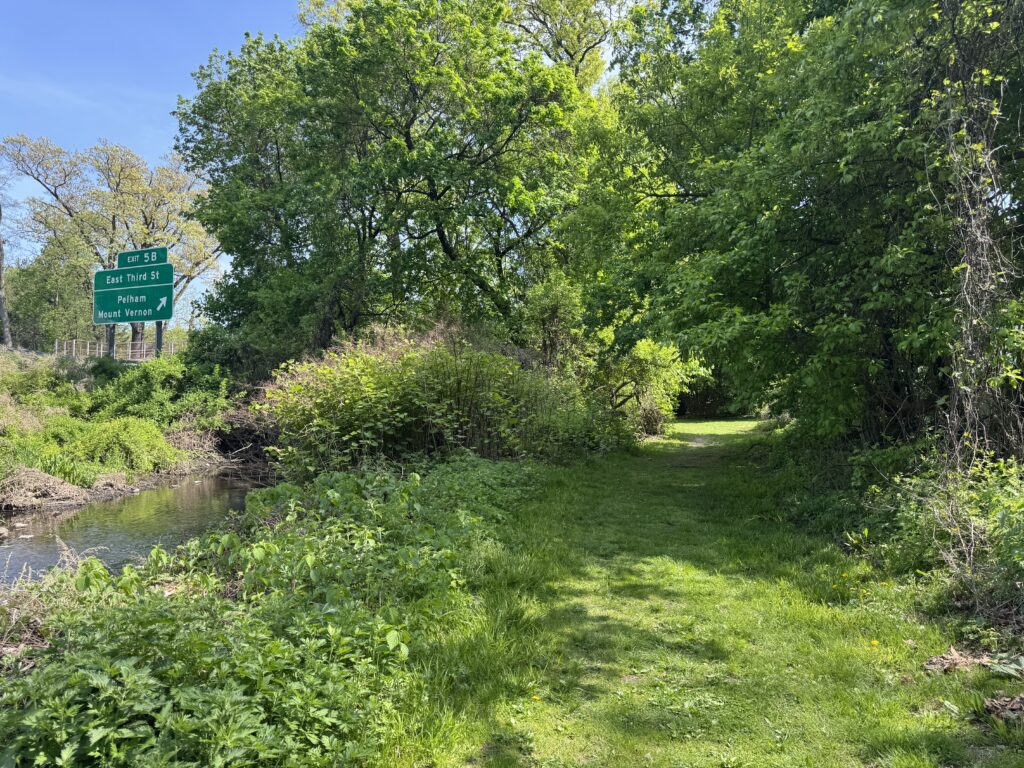
Westchester Land Trust (WLT) is an organization focused on the preservation and restoration of lands in Westchester County and nearby communities. Since 1988, they have been able to preserve 9,662 acres of open space, including 1,360 acres of preserves owned by the organization, which are free and open to the public year-round. Through conversations with Mount Vernon residents, WLT found out about the parcel of land, which they refer to as Kiana. The site is a 2.85-acre urban riparian forest that connects to the Long Island Sound. The main goal of the project was to evaluate the site’s potential for ecological restoration and as a place for community connection to nature. To confront the preliminary concerns of the project, WLT broke up their process into four phases, with the first phase, “Assessment,” being awarded by the Long Island Sound Community Impact Fund (LISCIF).
LISCIF is a partnership among Restore America’s Estuaries, the Long Island Sound Partnership, and the U.S. Environmental Protection Agency. LISCIF’s purpose is to provide technical and financial support to address environmental issues and improve the accessibility and quality of the Long Island Sound. Westchester Land Trust is one of 18 awardees of the LISCIF program for 2024. Additionally, WLT, along with other LISCIF awardees, is tackling the goals of the Long Island Sound Partnership’s Comprehensive Conservation and Management Plan (CCMP). The CCMP provides a blueprint for collaboration and establishes goals, objectives, and actions for the next 10 years to further restore and protect the Sound. The implementation actions are specific actions that help attain the goals and objectives of the CCMP themes.

In 2025, the Long Island Sound Partnership updated its CCMP. Project Kiana aligns with two key themes in the updated plan: Thriving Habitats and Abundant Wildlife (THAW) and Informed and Engaged Public (IEP). Through ecological assessment, community engagement, and collaboration with local partners, the project advanced THAW 1-1, which supports coastal habitat restoration through broad collaboration and communication, and IEP 1-1, which focuses on working with local governments, community leaders, and organizations to expand access and foster a sense of belonging.
Through community events such as Mount Vernon’s CityFest and Viva La Sound Environmental Festival on City Island, 194 nearby residents and community members were cumulatively engaged. At both community events, WLT used a tabletop watershed model, called an Enviroscape, to demonstrate the importance of a healthy riparian buffer zone, that is, the vegetated shoreline along the Hutchinson River. Since many locals haven’t been to the Project Kiana site, the Enviroscape was a helpful tool for residents to imagine and understand its context within the environment. In addition to the outdoor events, WLT hosted one in-person and one virtual workshop, educating a total of 52 participants of all ages and gathering their feedback on the site’s significance and future possibilities.
Educating the public about the Sound and its watersheds accomplishes the CCMP Implementation Action IEP 2-2: Host and promote opportunities to participate in Long Island Sound-based formal and informal educational programs tailored for multiple user groups and ages. The Enviroscape proved to be a tool that youth and families were curious about and wanted to learn more about. Groups gathered around the model to see for themselves an example of a natural environment within a short distance from their homes. Awareness of the Sound helps Mount Vernon dwellers appreciate and take care of the Sound’s ecosystems, which promotes “Thriving Habitats and Abundant Wildlife”.
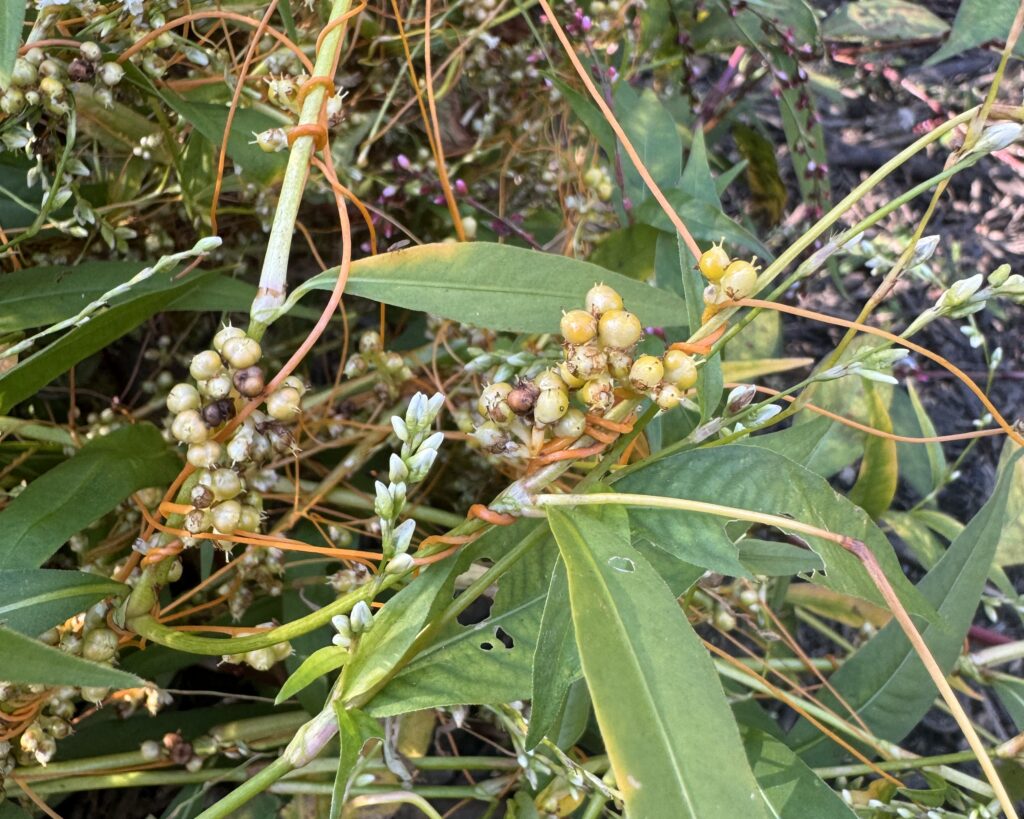
During their assessment phase, WLT conducted a Habitat and Biodiversity Assessment. WLT hired consultants to survey the land and observe the flora and fauna. The assessment documented a surprisingly diverse and ecologically valuable habitat within the watershed. The assessment also documented a rare population of a native plant called buttonbush dodder. Buttonbush dodder is listed as endangered in New York State (S1 – critically imperiled, or in other words, at very high risk of extinction). In this project, WLT worked to protect the biodiversity that lives inside the Sound’s watershed by learning about and keeping track of this jeopardized species. This accomplishes the implementation action “THAW 1-1: Restore coastal habitat by supporting projects that implement established restoration techniques or help validate innovative techniques and include broad collaboration and communication.” By documenting the preservation value of the ecological diversity of the Project Kiana site and engaging the local community, Westchester Land Trust is holistically supporting a watershed that is healthy for all to enjoy.
Project Kiana is an example of a foundational step in increasing community access to the Sound’s watersheds. Westchester Land Trust’s team worked with partners to assess the land while simultaneously educating the public about their watershed. These two achievements prove Westchester Land Trust’s commitment to protecting and improving interactions between locals and their waterways. Through the LISCIF grant, Westchester Land Trust has been able to support communities that have been disconnected from the Sound. In many ways, Project Kiana has inspired ongoing conversations among the community about the future of this land.
