Reestablishing the Sitka Spruce to Protect the Tillamook Estuary
Along the Oregon coast, tidal swamps dominated by Sitka spruce trees once thrived. These wetlands served as vital habitat for fish, stored vast amounts of organic carbon, and buffered communities from floods. Today, the region has lost over 95% of its Sitka spruce swamp, largely due to clearing for agriculture and development.
There is momentum behind the effort to bring back these vital ecosystems, however, little is known about where tidal swamp restoration will succeed or which planting method is most effective. In Tillamook Bay, Tillamook Estuaries Partnership (TEP) is filling that knowledge gap through its Restoration of Forested Tidal Swamp Habitat in the Tillamook Estuary project. With funding from the National Estuary Program Watersheds Grant Program, TEP is experimentally planting Sitka spruce at the Southern Flow Corridor: Landowner’s Preferred Alternative (SFC) restoration site to develop best-practice methodologies that will guide future restoration efforts.
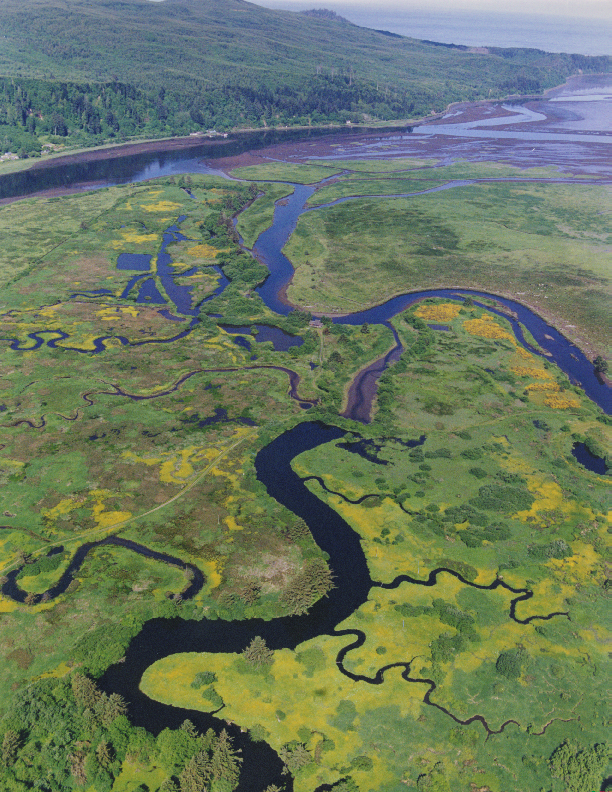
SFC, located at the head of Tillamook Bay, encompasses over 600 acres of wetland habitat. It was restored to tidal influence in 2016, making it one of the largest tidal restoration projects in the Pacific Northwest. At the time, the primary goal was to combat extreme flooding that would occur in Tillamook County, and the project proved to be a success. Not only was flooding reduced significantly, but salmon habitat and native vegetation are being restored.
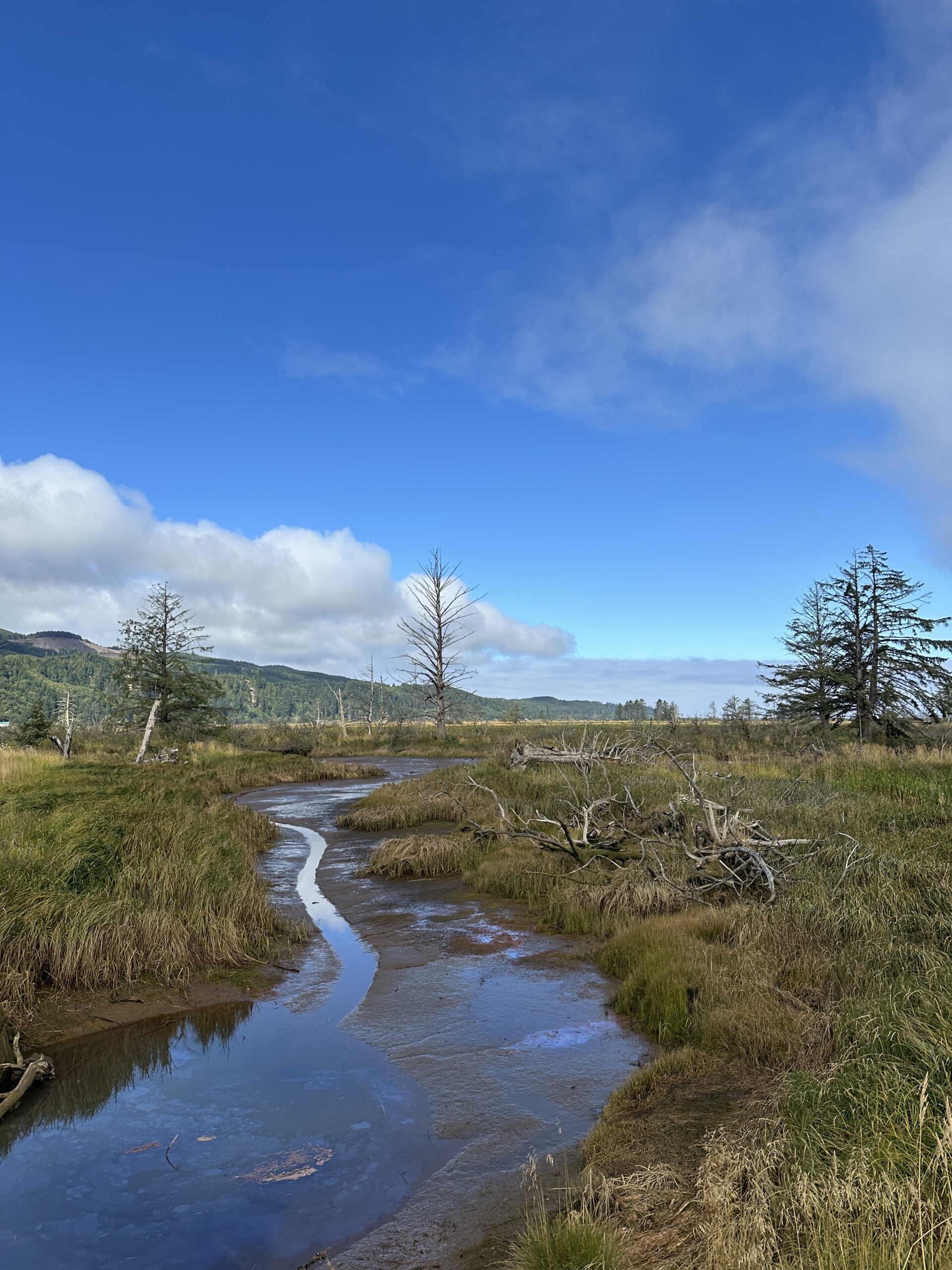
However, a challenge still remains. While the restoration of tidal flow passively restored native vegetation, such as sedges and rushes to the low marsh areas of SFC, the high marsh zones, once prime Sitka spruce habitat, continue to be dominated by invasive reed canarygrass. Originally introduced as a grazing plant for cattle, the aggressive species has spread and is outcompeting native vegetation.
To address this, TEP launched its National Estuary Program Watersheds Grant-funded effort to reestablish Sitka spruce within the site. They plan to plant Sitka spruce across 10 to 15 acres of high marsh at SFC, using an experimental approach to test different planting methods across varying elevations and salinity levels. The goal is to increase understanding of which site condition and planting technique has the highest success for re-establishing tidal swamp vegetation in reed canarygrass-dominated areas.
Strong partnerships have been key to this effort. TEP’s Native Plant Nursey is supplying locally sourced and coastally adapted trees, giving them the best chance of survival. Meanwhile, researchers at Oregon State University and the Institute for Applied Ecology are providing support with experimental design, data collection, modeling, and long-term monitoring efforts.
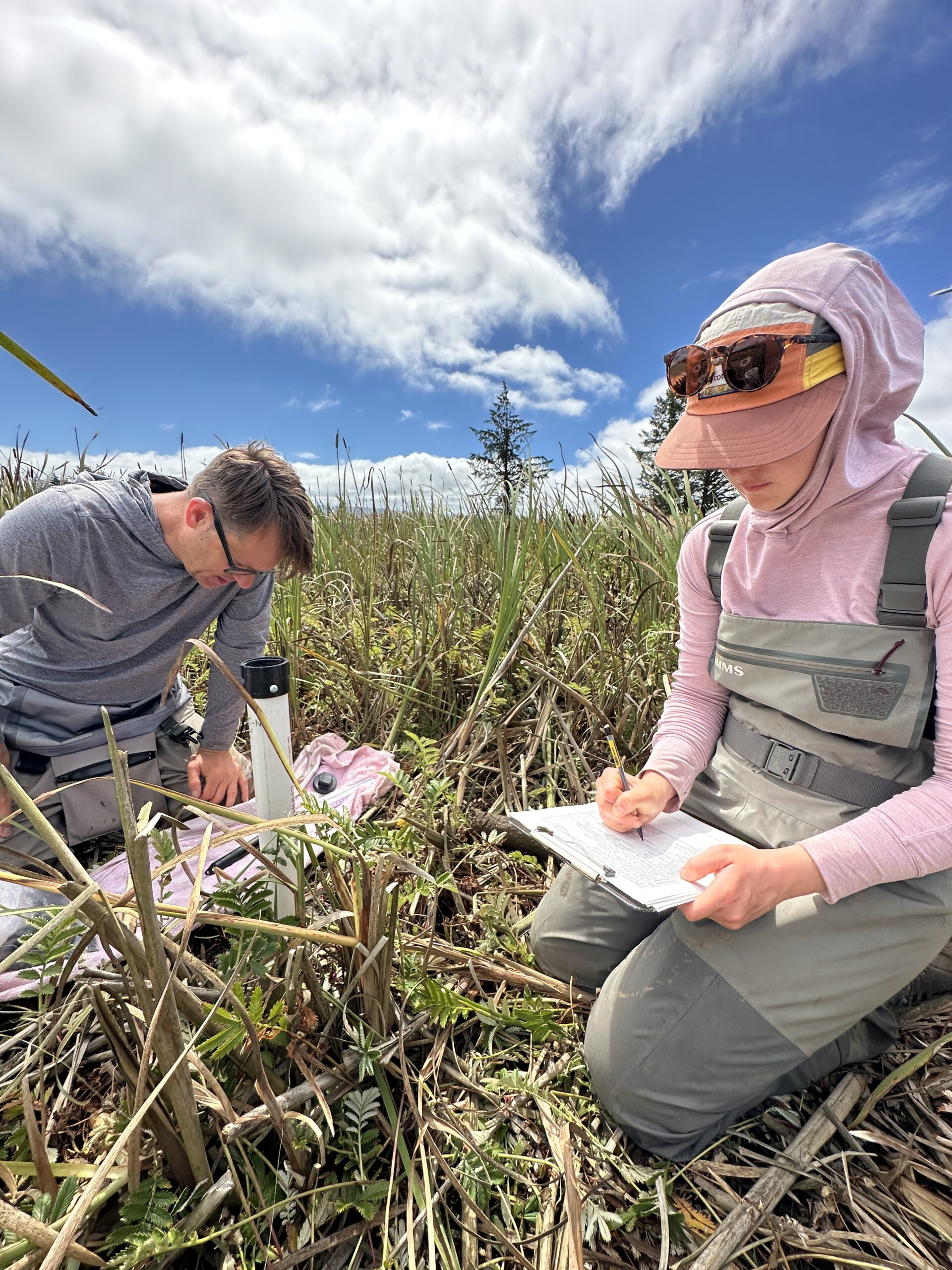
The restoration of forested tidal swamp habitats in SFC not only has ecological impacts but is important to the Tillamook County community as well. With public access to the site, SFC provides both recreational and economic opportunities through its diverse habitats. Activities such as bird watching, duck hunting, fishing, and nature walks have become popular since its restoration and attract visitors from all over. As TEP’s Flynn DeLany explained, “The community has really fallen in love with the Southern Flow Corridor. People have seen the impact.”
Currently, TEP is planning and collecting baseline data, with planting scheduled for 2026. By testing new methods and sharing lessons learned, the project hopes to inform tidal swamp restoration efforts across the Pacific Northwest and help revive a once abundant ecosystem.
